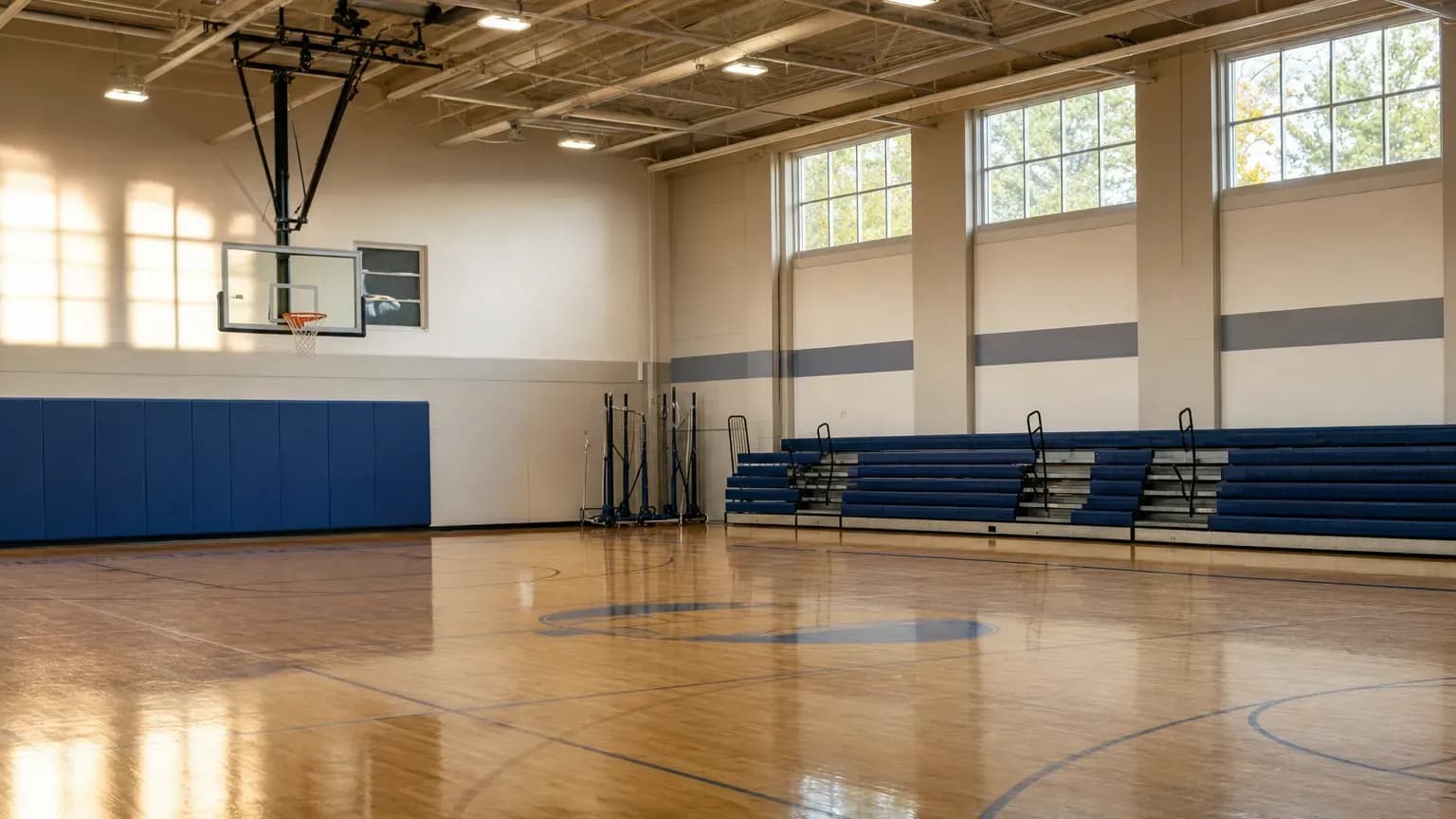
A basketball gym rental typically costs $25 to $65 an hour at a community center and $35 to $105 an hour at a school or city gym for practice and recreational use. Non-athletic events such as banquets or parties often cost $100 to $165 an hour, with a bigger deposit. Nonprofit and youth groups usually pay less. Private training facilities charge more. These ranges come from published rate pages of US community centers, US school districts and city facilities in Alberta and Saskatchewan. The price depends on who's renting, the use, the time of day, and any custodial fees.
The rest of this guide is for gym owners and managers pricing whole-gym rentals. If you sell individual courts by the hour, our basketball court rental pricing guide covers half-court and full-court rate cards.
What renters typically pay
These are typical quotes from the public rate pages we sampled, not averages. Rates for the same gym can differ a lot depending on the renter.
Facility type | Typical hourly rate | What changes the price |
|---|---|---|
US community center gym, athletic use | $25–$65/hour | Some charge the same rate at all hours; others add a prime rate |
US community center gym, general or event use | $100–$165/hour | Higher security deposit, often several hundred dollars |
US school district gym | About $35–$90/hour in the districts we sampled | Elementary gyms cost less than high school gyms; group type sets the rate; custodial fees can be extra |
Alberta city gym | About CA$105/hour adult, CA$52/hour minor | Minors often get half the adult rate |
Alberta school gym booked through the city | About CA$38/hour minor weeknight, about CA$104/hour weekend | Caretaking level changes the rate |
Saskatchewan school gym, youth nonprofit | About CA$20/hour | Some community groups pay no fee |
Private training facility or sports complex | Often well above public rates | Market-driven; see our basketball court post |
Patterns in the published rates:
- The renter matters more than the hour. Most public gyms set rates by group type, such as youth nonprofit, adult recreational, private and commercial. The gap between the lowest and highest tier can be four or five times.
- Events cost more than sport. One Kansas City community center charges the same rate for athletic use at all hours but doubles or triples it for non-athletic events and raises the security deposit fivefold.
- Full-day pricing rewards long bookings. Some centers sell a full day for about seven times the hourly rate, which suits tournaments and camps.
- Custodial time is often billed separately. School gyms in particular add caretaker or custodian hours on top of the posted rent, especially on weekends.
How to price whole-gym rentals
Define your products
A gym can be sold several ways, and each should have its own price:
- Hourly gym rental: team practice, pickup group, small camp session.
- Half-day or full-day block: tournaments, camps, clinics and school events.
- Event rental: banquet, graduation, fundraiser, party. Priced higher because of setup and floor risk.
- Partial gym: if you have a divider curtain, sell one court or half the room at about half the full-gym rate, plus a small premium.
If your gym is lined for several sports, the same floor can host basketball, volleyball, pickleball and badminton. Price by space and time, not by sport, so your rates stay simple and you don't end up arguing about whether a volleyball practice should pay more than a basketball one.
Renter tiers
Public and nonprofit operators commonly use four tiers:
- Youth nonprofit and community groups: lowest rate, sometimes subsidized.
- Adult recreational: adult leagues, pickup groups, church teams.
- Private: individuals and families booking for personal use, including parties.
- Commercial: for-profit camps, trainers and event organizers who resell your space.
Private gyms don't need four tiers, but they often give a contract rate to clubs that book a full season. Whatever you choose, write down what proof you need, such as a nonprofit registration or a roster showing most players are under 18.
Prime and non-prime
Gym demand follows the school day. Weekday evenings from about 5 to 10 p.m. and weekend days fill first with youth teams, leagues and events. Weekday daytime is hard to sell unless you have homeschool groups, seniors' programs, camps on school holidays or daytime pickleball.
A typical split:
- Prime: weekdays from 5 p.m. to close, plus weekends.
- Non-prime: weekdays during school hours.
- Gap: non-prime at 60 to 75 percent of prime, or a flat rate if your daytime demand is very low and you'd rather keep pricing simple.
Duration and minimums
Set a one-hour minimum for practices and a two- to four-hour minimum for events. Events have setup and cleanup time, which should be inside the booked block, not free time on either side. A half-day block of four hours at about 3.5 times the hourly rate gives tournament and camp organizers a reason to book bigger blocks.
Deposits and add-on fees
Most published gym rental pages list extra charges. Decide which ones you'll use and put them on your rate card:
- Security or damage deposit: small for athletic use, larger for events with food or decorations. Refund it after a post-event inspection.
- Booking deposit: for tournaments, camps and events, a 25 to 50 percent non-refundable deposit to hold the date.
- Custodial or staff fee: per hour of staffed time, often with a minimum.
- Equipment: tables, chairs, sound system, scoreboard, volleyball standards.
- Floor protection: a fee for laying floor covering if you allow street shoes for events.
A clear facility rental agreement should spell out deposits, damage, insurance and cancellation terms.
A worked rate card example
Here's an example for a hypothetical single-gym community facility with one full-size court that divides into two halves. It's an illustration within the ranges above, not a recommendation for your market.
Product | Youth nonprofit | Adult recreational | Private or commercial |
|---|---|---|---|
Full gym, 1 hour, non-prime (Mon–Fri before 5 p.m.) | $30 | $45 | $60 |
Full gym, 1 hour, prime (Mon–Fri after 5 p.m., weekends) | $45 | $70 | $90 |
Half gym (one side of the divider), 1 hour, prime | $25 | $40 | $50 |
Full gym, half day (4 hours) | $160 | $245 | $315 |
Full gym, full day (8 hours) | $300 | $460 | $600 |
Non-athletic event, per hour (3-hour minimum) | $100 | $120 | $150 |
Security deposit, athletic / event | $100 / $400 | $100 / $400 | $100 / $500 |
Tables and chairs package, add-on | $40 | $40 | $40 |
Check the card against what you actually sell. Most single-gym facilities earn the bulk of their rental income from youth teams on weeknights and from tournaments and events on weekends. Model those first, then see what daytime rentals need to add to cover costs.
Costs your rates should cover
- heating, cooling and lighting for a large room
- floor care: regular cleaning, periodic screen-and-recoat, and eventual refinishing
- custodial staff for opening, closing and cleanup
- supervision for events and youth bookings
- liability insurance, plus a requirement that teams and event renters show their own coverage
- equipment replacement: backboards, nets, divider curtain, bleachers
- payment processing and booking software
Running gym rentals with booking software
The hard part of gym rentals is overlap. A full-gym tournament blocks both halves. A weekly youth team holds the same weeknight slot all season. Event requests need a look before you say yes. Keeping all of that in a spreadsheet gets error-prone fast.
Gym booking software handles the calendar and payments together. In Sports Booking Management, you can set up the full gym and each half as separate spaces with their own operating hours, booking rules and rates. Pricing tiers by length cover hourly, half-day and flat-fee event rentals. Teams book on a public booking page without an account and pay through Stripe checkout, or you can invoice seasonal groups and set them up as recurring bookings. Turn on approvals if you want to review event requests first, and add tables, chairs or equipment to a booking as add-ons. It's also a good fit for basketball facilities that rent both courts and the whole room.