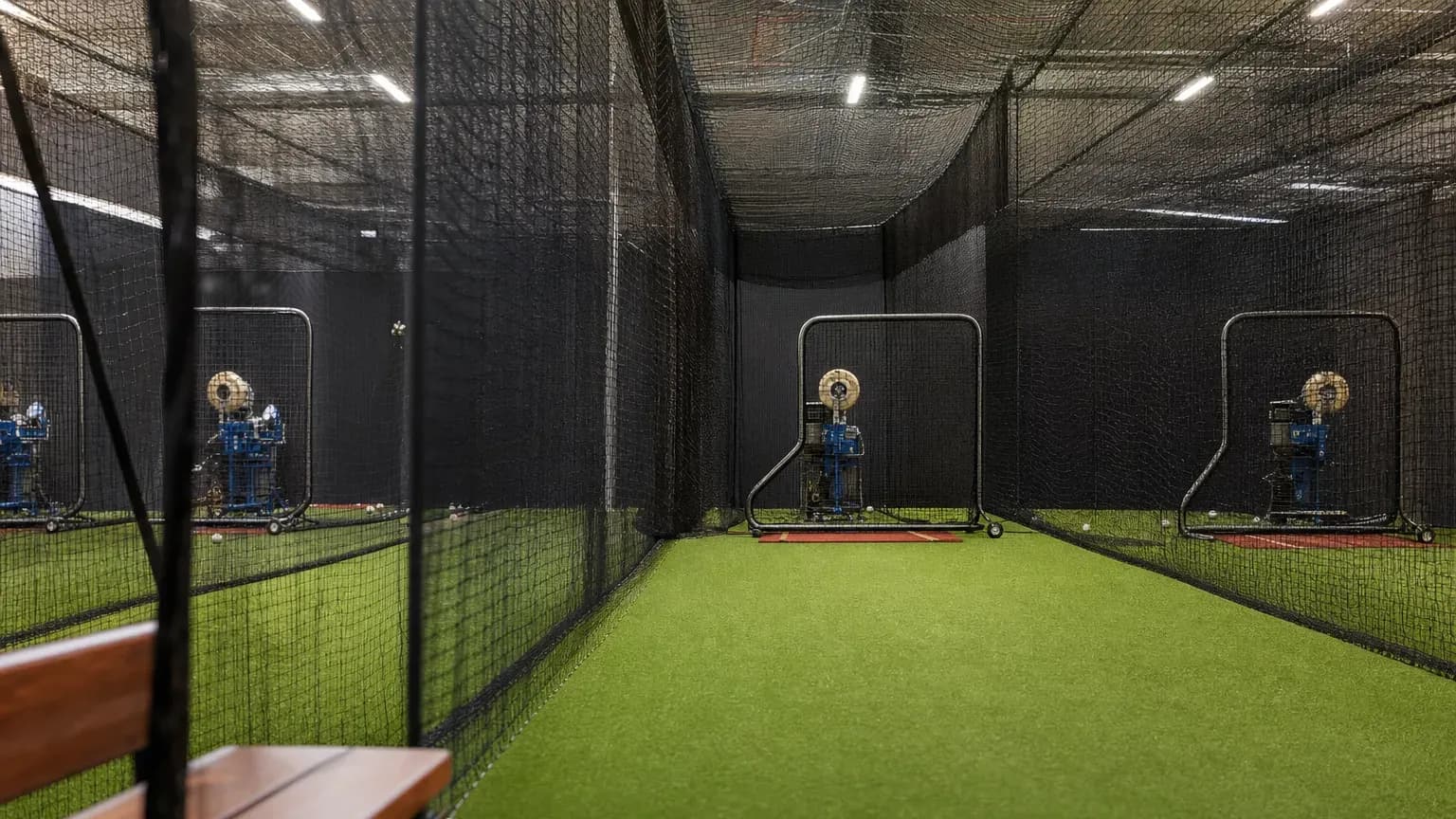
A batting cage typically costs $1,500 to $10,000 for one residential lane, depending on whether you install it yourself and how heavy the net, frame and pitching machine are. A commercial outdoor tunnel built for daily rental use commonly lands around $15,000 to $30,000 with a steel frame, footings, full turf and a commercial pitching machine. Adding 3 to 5 cages inside an existing building is often quoted at $35,000 to $80,000, and a full standalone indoor batting cage facility can run $250,000 to $600,000 or more once the building fit-out is included.
These are typical 2026 contractor and supplier quote ranges for the US, cross-checked across several published cost guides from net makers, cage builders and facility operators. Your costs depend on lane length, net grade, frame type and whether the cages are indoors.
Assumptions behind these numbers
- US pricing, 2026
- One tunnel about 70 feet long, 14 feet wide and 12 feet high (a common commercial size) unless stated. A 70 x 14 foot lane has 980 square feet of floor.
- Baseball distances: 60 feet 6 inches from rubber to plate for high school and adult baseball, which a 70-foot tunnel fits with room behind the hitter. Youth leagues and softball use shorter distances, so shorter tunnels can work.
- Outdoor builds assume level ground; indoor builds assume an existing building with enough height and floor area
Batting cage cost by component
Component | Typical range per lane | What drives the price |
|---|---|---|
Net | $300–$2,400 | Twine gauge (#18 economy to #60 commercial), material, length |
Frame: portable or kit | $500–$3,000 | Steel tubing vs pipe kit, height, cable tensioning |
Frame: commercial steel or ceiling cable system | $2,000–$10,000+ | Engineering, span, retractable hardware |
Footings and foundation (outdoor) | $0–$2,800 | Ground stakes vs concrete footings |
Site prep (outdoor) | $500–$5,000 | Grading, drainage, base material |
Turf, materials only | $1.20–$5.50 per sq ft | Pile, backing, infill; some owners turf only the hitting zone |
Turf, indoor hitting turf installed | about $6–$12 per sq ft | Product, pad underneath, labor |
Pitching machine | $300–$2,000 basic; $2,000–$5,000 commercial; $5,000–$15,000 programmable | Arm vs wheel, speed, pitch types, duty cycle |
L-screen | $30–$250 for basic screens; heavy-duty screens cost more | Frame and net weight |
Lighting (outdoor lane) | $200–$2,500 | Fixture count and distance to power |
Professional installation | about 15–45% of materials cost | Region, frame type, access |
The two choices that move the total most are the frame (a pipe kit vs a commercial steel or cable system) and the pitching machine. For a rental cage, both take punishment every day, so the cheapest options tend to cost more over time.
Worked example: three batting cage budgets
Each figure sits inside the ranges above. Installation in the commercial and indoor columns is a stated allowance, not a quote.
Line item | Backyard lane, DIY | Commercial outdoor lane | 4 indoor lanes in an existing building |
|---|---|---|---|
Net | $800 | $1,600 | $6,400 ($1,600 x 4) |
Frame or cable system | $1,200 kit | $3,000 steel | $12,000 ($3,000 x 4) |
Footings and site prep | $500 | $5,500 | none |
Turf | $600 (hitting zone only) | $4,900 (980 sq ft at $5, materials) | $31,360 (980 sq ft x 4 at $8 installed) |
Pitching machine | $1,000 | $4,000 | $16,000 ($4,000 x 4) |
L-screen | $150 | $250 | $1,000 |
Lighting | none | $2,500 | $3,000 upgrade |
Installation allowance | DIY | $3,000 | $10,000 |
Total | $4,250 | $24,750 | $79,760 |
The indoor example lands at the top of the published $35,000–$80,000 range for 3 to 5 cages because it uses installed turf across every lane and a commercial machine in each one. Owners often save by turfing only the hitting and pitching zones or by sharing machines between lanes and selling some lanes as "bring your own pitcher" rentals.
Indoor facility costs
If you're building a standalone batting cage business rather than adding lanes, the building dominates the budget. Published ranges:
Item | Typical range |
|---|---|
Fit-out of a leased building (cage framing, turf, netting, lighting, HVAC upgrades, electrical for machines) | $80,000–$200,000 |
Professional netting and installation for a multi-cage facility | $15,000–$50,000 |
6 to 8 commercial pitching machines | $30,000–$80,000 |
Turf for cages plus rubber flooring in common areas | $10,000–$25,000 |
Total for a modest 6–8 cage facility in leased space | often $280,000–$380,000 |
Standalone indoor facility, all in | $250,000–$600,000+ |
Things to check in a building before you sign a lease:
- Clear height for cage nets, light fixtures and the ball flight of hard line drives
- Column spacing that lets you lay tunnels side by side without a column in a lane
- Power for several pitching machines running at once
- Sound if you share walls with other tenants
For a full facility layout with multiple sports, see sports facility design.
Outdoor or indoor: which to build
Outdoor cages cost far less to set up, because you're buying a net, a frame, footings and turf rather than a building. They make sense at an existing ballpark, sports complex or a property where you already own the land. The trade-off is the season: weather limits the bookable months in most of the US, and rain cancels bookings you've already sold.
Indoor cages can run all year, and winter is often the busiest time, when teams and serious hitters can't practice outside. The cost is the building, either a lease and fit-out or a new structure, plus HVAC, lighting and the staff to keep it open longer hours.
Adding lanes to an existing facility is often the middle ground. If you already run a gym, turf field or multi-sport building with spare floor area and enough height, retractable cages that lift toward the ceiling let the same floor serve as a turf area or practice space when the cages are up. That spreads the rent across more uses.
A simple way to decide: if you can't name who will book the cages in your slowest season, start smaller or outdoors and prove demand first.
Running costs
- Net repair and replacement, especially behind the hitter and at the pitching end
- Balls, which wear out fast in machines; use the type your machine maker specifies
- Machine servicing, wheels, arms and motors
- Turf wear in the batter's box
- Insurance; one published guide puts a basic policy for a small cage at about $300 to $1,000 a year, but commercial facilities pay more
- Electricity, staff and payment processing
Payback example for a rental cage
Rental cages are sold by the lane-hour, by the half hour, or by tokens for a set number of pitches. For a lane-hour model, payback depends on the hourly lane rate and utilization, the share of open hours that are booked.
Assumptions (illustrative):
- Build cost: about $25,000 (the commercial outdoor lane above)
- Bookable hours: 50 a week (weekday afternoons and evenings, plus weekends)
- Season: 30 weeks a year outdoors (most US climates allow roughly 6 to 8 months)
- Operating costs for this lane: $1,500 a year (insurance share, net repairs, balls, power, processing)
- Ignores land, rent, financing and taxes
Formula: annual revenue = rate x 50 hours x utilization x 30 weeks. Payback in years = $25,000 / (revenue − $1,500).
Hourly lane rate | 20% utilization | 35% utilization | 50% utilization |
|---|---|---|---|
$30 | $9,000 a year, payback 3.3 yrs | $15,750 a year, payback 1.8 yrs | $22,500 a year, payback 1.2 yrs |
$40 | $12,000 a year, payback 2.4 yrs | $21,000 a year, payback 1.3 yrs | $30,000 a year, payback 0.9 yrs |
$55 | $16,500 a year, payback 1.7 yrs | $28,875 a year, payback 0.9 yrs | $41,250 a year, payback 0.6 yrs |
The $30 to $55 rates are within ranges published by cage operators, but check what lanes near you charge. For an indoor facility, run the same formula across all lanes and a 50-week year, then subtract rent, staff and utilities before dividing into your fit-out cost. Team rentals, private lessons and winter demand from travel teams are what usually carry indoor cages. Our guide on how to start a batting cage business covers those revenue streams.
Buying checklist
- Tunnel length matched to the players you serve (adult baseball, youth, softball)
- Net gauge and material rated for commercial use, indoors or outdoors
- Frame or cable system rated for your net weight and span
- Turf with a hitting mat or reinforced batter's box
- Pitching machine duty rating for daily commercial use, and the right balls for it
- L-screen for every lane that uses a live pitcher or feeder
- Lighting that doesn't shine into the hitter's eyes
- Power, sound and height checked in any building
Booking the lanes
Rental cages earn the most when lanes are booked ahead instead of left to walk-ins. A booking system for batting cages lets hitters and teams reserve a lane and pay before they arrive.
In Sports Booking Management, each lane is its own bookable space with its own hours and rate, and pricing tiers let you charge by the hour, half day or a flat fee for a team rental. Customers book on a public page and pay through Stripe checkout. You can add a pitching machine or bucket of balls as an add-on, and recurring bookings hold weekly team practice slots. It's $79 a month for unlimited lanes and bookings.